


Reviewed by NEETnova Academic Council (AIIMS & GMC Alumni Panel). Updated for NEET 2027.
Opening your NCERT textbook at 11:00 PM after a grueling day of board practical files, school assignments, and coaching homework is a quiet kind of exhausting that only a Class 12 science student truly understands. You stare at the electrostatics derivations or human reproduction diagrams, wondering if you are preparing for your school board exams or digging your own grave for the national entrance test. Let us be completely honest with each other: trying to score 95% in your CBSE Class 12 board exams while chasing a 680+ score in the upcoming NEET 2027 examination is not about working twenty hours a day. It is about building a synchronized study engine where your board preparation feeds directly into your competitive rank.
As serious aspirants gear up for the upcoming NEET 2027 examination scheduled for May 2027, the biggest trap students fall into is treating board exams and NEET as two separate mountains. They spend six months writing exhaustive, descriptive answers for boards, and then panic-switch to rapid-fire multiple-choice questions in January. That mental whiplash costs thousands of ranks. When you understand that 85% of NEET questions emerge directly from the lines, diagrams, and summary tables of standard NCERT textbooks—the exact books prescribed by CBSE—you realize that mastering your board syllabus is the ultimate foundation for your medical entrance success.
The Dual-Target Reality: Understanding the Synergistic Overlap
Many students make the fatal mistake of isolating their board exam preparation from their NEET strategy. They think board exams require rote memorization of long derivations and historical definitions, while NEET requires wild shortcut tricks and rapid-fire guessing. Both beliefs are completely wrong. The National Testing Agency strictly bases its Physics, Chemistry, and Biology question papers on the rationalized NCERT curriculum, which is also the core textbook for CBSE Class 12.
When you study Organic Chemistry reaction mechanisms for your board exams, you are simultaneously building the exact conceptual clarity required to solve tricky multi-step conversion questions in NEET. When you practice drawing neat, labeled diagrams of the human eye or male reproductive system for your board practicals and subjective papers, you lock those structural details into your visual memory. This makes identifying anomalous diagram-based questions in the NEET paper effortless.

Caption: Simulating actual 2:00 PM to 5:20 PM NTA exam hall conditions with full-length mocks.
However, the examination temperament differs drastically. Board exams test your ability to explain concepts clearly in written English with precise keywords. NEET tests your speed, accuracy, and elimination skills under immense time pressure across 200 questions in exactly 200 minutes. Balancing these two worlds requires a disciplined daily routine that respects both school obligations and objective problem-solving.
Month-by-Month Master Roadmap for NEET 2027 Aspirants in Class 12
To prevent burnout and secure top scores in both boards and NEET, your academic year must be divided into three distinct phases. Do not wait for your school pre-boards to start serious testing. Your timeline from the start of Class 12 to the final exam day in May 2027 must be meticulously planned.
Designing Your Daily Timetable: The 24-Hour Blueprint
Let us look at a realistic daily schedule for a Class 12 science student attending regular school. If you are a dummy school student, you can adjust these hours, but the structural ratio of subjective theory reading to objective question practice must remain balanced.
- 05:30 AM – 06:00 AM: Wake up, fresh up, light stretching, and reviewing formulas or biology flashcards from the previous night.
- 06:00 AM – 07:30 AM: High-Focus NEET Session (Physics Numerical Practice or Organic Chemistry Mechanism revision).
- 07:30 AM – 08:30 AM: Get ready for school, quick breakfast, and commute.
- 09:00 AM – 02:00 PM: School Hours. Use free periods or lunch breaks to silently read NCERT Biology text or revise inorganic chemistry trends instead of wasting time.
- 03:00 PM – 04:30 PM: Rest, recharge, healthy evening snack, and physical movement to clear your mind.
- 04:30 PM – 07:30 PM: CBSE Board Study Block. Focus on school homework, numerical problem writing, derivation practice, and practical file documentation.
- 07:30 PM – 08:30 PM: Dinner break with family.
- 08:30 PM – 10:30 PM: NEET Objective Practice Block. Solve minimum 60-80 MCQs using NTA pattern guidelines without using a calculator. Focus strictly on speed and error reduction.
- 10:30 PM – 11:00 PM: Day wrap-up: maintain an error notebook, review mistakes made during MCQ practice, and plan the next morning's targets.
Subject-Wise Strategy for Simultaneous Board & NEET Mastery
1. Physics: Derivations to Numerical Speed
In CBSE board exams, you are expected to write the complete mathematical derivation for Gauss law, Ampere's circuital law, or the lens maker's formula: . In NEET, you never derive formulas; you apply their final outcomes instantly.
- Board Strategy: Practice writing derivations step-by-step on paper without looking at notes to secure full marks in 3-mark and 5-mark subjective questions.
- NEET Strategy: Memorize the direct result and boundary conditions. For instance, knowing the electric field due to an infinite sheet is allows you to solve numericals in seconds. Practice rotational mechanics and electrodynamics questions daily using standard objective modules.
2. Chemistry: Balancing Equations and Exceptions
Chemistry is your highest-scoring bridge between boards and NEET. Physical chemistry requires rigorous numerical practice for both board exams and NEET physical sections.
- Inorganic Chemistry: Read NCERT line-by-line. The exact sentences from NCERT blocks form the basis of both CBSE statement-type questions and NEET assertion-reasoning questions. Pay extreme attention to color changes, preparation methods, and anomalies in the -block and -block elements.
- Organic Chemistry: Never memorize name reactions blindly. Understand the electrophilic or nucleophilic attack mechanism. When you know why Gattermann-Koch reaction uses anhydrous , you can answer both board subjective mechanism questions and NEET product prediction questions with 100% confidence.
3. Biology: The Undisputed King of 360 Marks
Biology carries 360 marks out of 720 in NEET, exactly half your total score. Fortunately, CBSE Class 12 Biology syllabus covers high-yield NEET units like Genetics, Evolution, Biotechnology, and Human Reproduction.
- The NCERT Bible: Treat every single caption under every diagram in NCERT Biology as a potential exam question. Learn scientific names, scientist names mentioned in chapter introductions, and summary paragraphs at the end of each chapter.
- Board vs NEET Writing: For boards, practice drawing clean pencil diagrams with proper labels and writing detailed explanatory paragraphs for processes like transcription or immune response. For NEET, train your eyes to catch single-word traps in NCERT statements such as 'always', 'never', 'only', or 'most'.
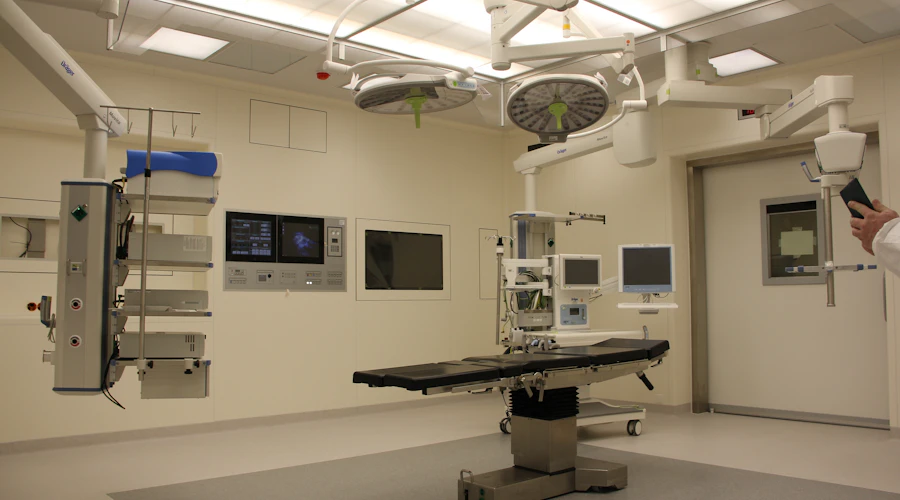
Caption: State medical college hospital infrastructure and facilities.
Where Aspirants Lose 40+ Marks: Common Traps in Class 12 Dual Prep
Every year, thousands of brilliant students fail to clear NEET or secure top medical seats despite studying 14 hours a day during Class 12. This failure rarely stems from a lack of intelligence; it comes from specific tactical errors that drain valuable marks.
- The Derivation Trap: Spending four hours daily deriving complex physics formulas that have zero objective utility for NEET, while neglecting basic graph analysis and dimensional analysis.
- Ignoring Mock Test Simulation: Waiting until January or February to attempt your first full-length 720-mark test. By then, time management during the actual 200 minutes (2:00 PM to 5:20 PM) becomes an unmanageable panic attack.
- Neglecting Class 11 Backlogs: Getting so absorbed in Class 12 board preparations that you completely forget Class 11 units like Mechanics, Plant Physiology, and Chemical Bonding, which make up nearly 45% of the NEET question paper.
- Passive Reading Instead of Active Recall: Reading NCERT biology chapters like a storybook three times instead of testing yourself with blank-page active recall and solving chapter-wise objective questions immediately after reading.
Actionable 3-Step Revision Protocol for Board & NEET Success
Execution separates top rankers from average aspirants. Follow this strict 3-step protocol for every single chapter in your Class 12 syllabus:
- Phase 1: Conceptual Grasp (The Board Foundation): Read the NCERT chapter thoroughly. Make your own handwritten summary notes highlighting definitions, formulas, and experimental setups required for CBSE subjective exams.
- Phase 2: Active Recall & PYQ Mapping (The NEET Bridge): Immediately solve past 10 years' NEET questions and CBSE board questions for that chapter. Identify where board questions test subjective clarity and where NEET tests objective application.
- Phase 3: Timed Mock Simulation (The 200-Minute Test): Take section-wise or full-length timed tests on the NEETnova platform. Analyze every single incorrect answer in your error notebook, ensuring you never repeat the same calculation or conceptual mistake twice.
Why 50,000+ NEET Aspirants Rely on NEETnova for Daily Preparation
Balancing your CBSE board exams and your NEET 2027 preparation requires surgical precision, errorless study material, and relentless practice under actual NTA exam conditions. Merely reading textbooks is not enough to secure a government medical college seat; you must train your brain to solve high-yield questions under strict time pressure.
To bridge the gap between ordinary preparation and top-tier medical college selection, serious aspirants across India leverage NEETnova's cutting-edge AI-powered ecosystem:
- 50,000+ NCERT Line-by-Line PYQs & Question Bank: Start Free Practice Now
- 720 Marks Full Length Grand Mock Test Series: Attempt Real NTA Mock Test
- 1v1 Real-Time Medical Entrance Quiz Battles: Enter Live Battle Arena
- Spaced Repetition Memory Vault: Master Active Recall & Formulas
Official Free PDF Download: NEET Preparation Along with CBSE Class 12 Board Exam Timetable 2027 (Official Guide PDF)
Download the official, verified NTA NEET 2027 high-yield printable PDF booklet for NEET Preparation Along with CBSE Class 12 Board Exam Timetable 2027. Includes key regulatory rules and exam insights.
📌 Latest Recommended Reading: Master Electrochemistry Nernst Equation Kohlrausch Law Cell EMF for NEET 2027
📌 Latest Recommended Reading: Biotechnology Principles and Processes Restriction Enzymes NEET Master Guide
📥 Download NEET Preparation Along with CBSE Class 12 Board Exam Timetable 2027 (PDF Guide)
Complete, verified, high-yield PDF guide formatted for rapid revision and self-study. Download instantly for free.
Frequently Asked Questions
Common queries and official guidelines verified by NEETnova Academic Council.
Student Discussion & Doubt Clearing
Ask questions, clarify concepts with verified faculty, and discuss exam traps with peers.
Join 10,000+ Aspirants in Discussion
Have a doubt about this topic or want to discuss tricky NCERT statements? Log in to start interacting with faculty.
Log in to Post Doubt / CommentLoading active discussions...